
A shopper taps a Google Shopping result for a diamond ring. The thumbnail looked right. On the product detail page the metal is incorrect, the price is a stretch and the stone shape is close but not quite. The page expects commitment even though the shopper is still refining their choice. That gap is where most PLA visits leak. In this PLA landing page case study we treated the arriving traffic not as a final destination but as a pivot point and the results were dramatic.
The Problem – The Doorway Effect
We found that traffic from product-listing ads often lands directly on a PDP and expects the visitor to decide. But many shoppers are still exploring. They need the freedom to switch to a better fit without bouncing off the site. This mismatch is what we call the doorway problem: a click into the site becomes a dead end rather than a smart transition.
What We Changed
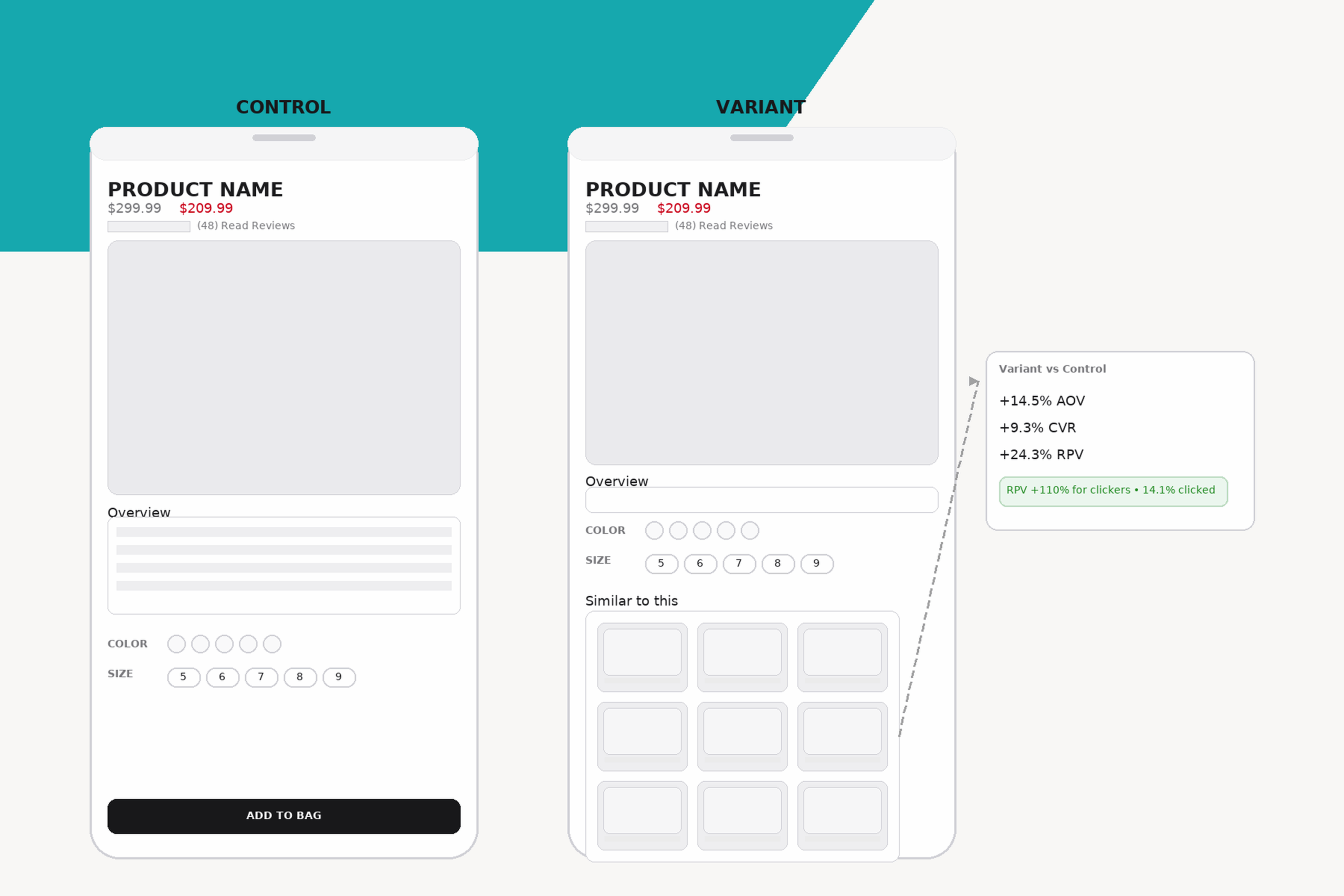
For sessions that began on a PLA and landed on a PDP we added a visually similar-items module. The module featured a set of alternate products in either a grid or a carousel layout. The job of the module was clear: let shoppers adjust style and price without losing momentum or leaving the page.
What We Measured
Across all PLA visitors the variant out-performed the control:
- Average order value (AOV) increased by 14.5%
- Visitor-based conversion improved by 9.3%
- Revenue per visit (RPV) rose by 24.3%
Then we looked at the visitors who actually pivoted into an alternative product. This is the tell.
- AOV increased by 55.0%
- Conversion rose by 42.8%
- RPV more than doubled with a 110.2% increase
- 14.1% of PLA visitors used the module
A small share of users used the pivot but those who did delivered far more value.
Why it worked
Traffic from PLAs is discovery traffic. Landing on a PDP expects a commitment stage even though the shopper may still be refining. By treating the PDP as an opportunity to pivot to a better fit we maintained context, kept the shopper on the site and enabled sideways motion to a closer match. In our test the carousel out-performed the grid layout probably because it displayed more options quickly and sustained forward motion.
Since PLA traffic is primarily discovery-level, landing on a PDP that assumes commitment creates friction. As Saras Analytics explains, PLAs offer discovery traffic that needs a relevant landing page to convert.
The practical rule
Treat PLA landings as refinement stages not commitment stages. Measure two audiences: all PLA traffic and the subset who clicked into an alternative. The second lens reveals the real value and prevents focusing on raw click rates that do not move revenue.
Bottom line
One simple pivot on the PDP turned near-miss visits into high-value orders. For the shoppers who used the module the revenue per visit more than doubled.
Explore more case studies:
- Ways to Pay Card Case Study: +8.3% RPV Lift
- PLA Landing Page Case Study: Turning “Near Miss” Visits into High-Value Orders
- Promo Drawer Case Study: 60% Fewer Promo Clicks Yet Revenue Improved
- Post-Add-to-Cart Lightbox Case Study: Interrupting Flow and Lowering RPV
Full Case Study Library